
Charts Strategic Positioning in Emerging Markets
Pizhou, China
June 27, 2025
2,000+ Live Global Viewers | 50,000+ Likes | 240+ Shares
Keywords: global plywood market, strategic positioning, emerging plywood producers, EUDR compliance, timber supply chain, sustainable construction, industrial innovation, brand differentiation, traceable sourcing, Vision 2030
Introduction: A Strategic Compass for the Plywood Industry
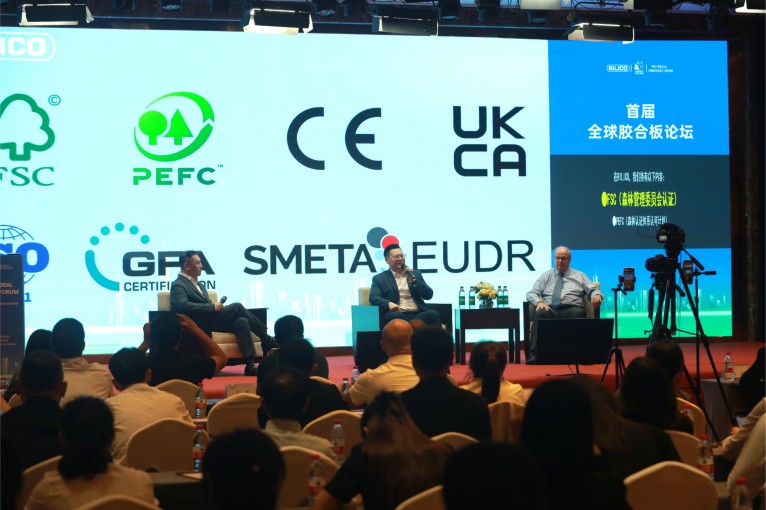
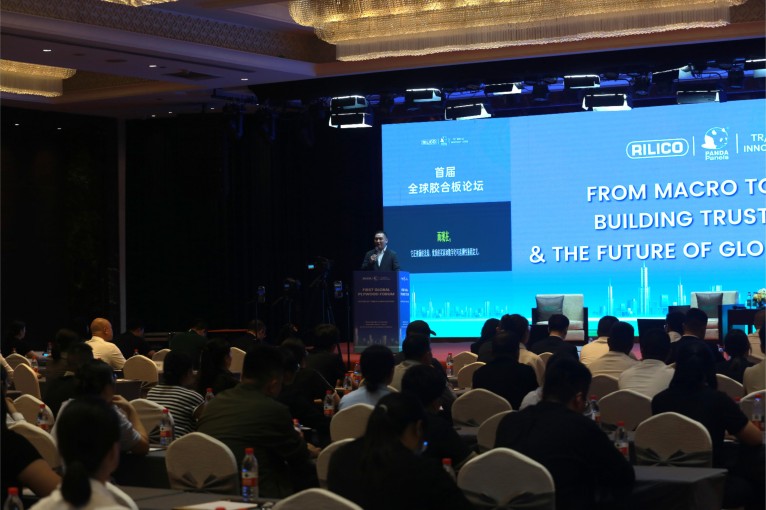
In the culminating Session 4—“The Global Landscape & Strategic Positioning”—of the First Global Plywood Forum, industry leaders turned their gaze outward, mapping the macro forces, emerging regions, and brand decisions that will define plywood’s role in sustainable construction and industrial innovation over the next decade.
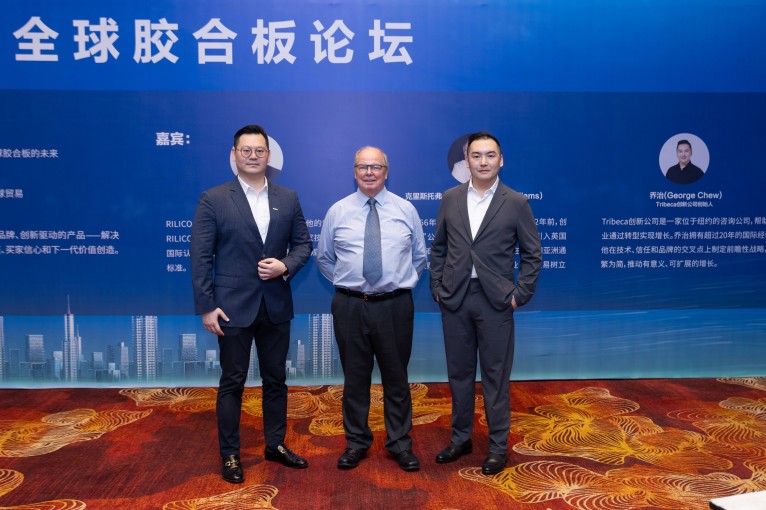
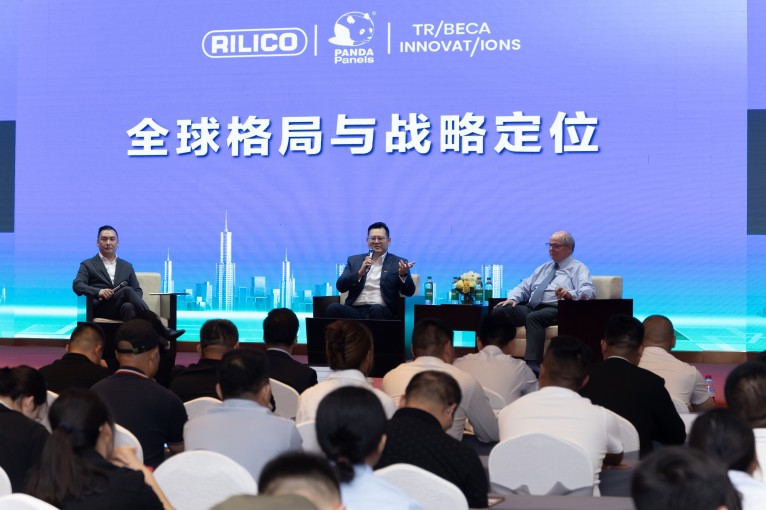
Organized by Tribeca Innovations (US) and moderated by George Chew, the panel featured Christopher Williams, Founder of Panda Panels (UK), and Jeff Wang, Executive Chairman of RILICO (Singapore/China). Together, they offered a strategic blueprint for international buyers, importers, and manufacturers navigating an increasingly complex global plywood market.
A New Class of Buyer: Value Demanded, Verification Required
Christopher Williams opened Session 4 with a clear-eyed view of shifting buyer expectations:
“We’re seeing a new kind of buyer emerge—one that demands value backed by verification. For example, in Southeast Asia, Indonesia and Malaysia are moving into higher-value exports. But it’s not without risk. Some mills are offering Birch plywood allegedly made with imported veneers from Latvia—without verifiable documentation. That’s dangerous post-EUDR. We’ve seen multiple red flags—products that can’t be validated by any third-party chain of custody.”
Here, Williams encapsulates the tension between cost and compliance in emerging plywood hubs. While countries like Indonesia and Malaysia present growth opportunities in the industrial wood sector, EUDR compliance and supply chain traceability remain critical hurdles. Buyers can no longer rely on regional duty advantages alone, verifiable sourcing is now the non-negotiable baseline.
Geopolitical Megatrends: Vision 2030 and Beyond
George Chew prompted Jeff Wang to explore how large-scale infrastructure initiatives are reshaping demand:
“In the Gulf States, for example, Vision 2030 in Saudi Arabia are pushing for massive infrastructure projects, and are driving demands for recycled-grade, inconsistent, and untraceable plywood. We understand cost matters—but not at the expense of performance or compliance, unfortunately not everyone else shares the same view.”
Jeff Wang’s observation highlights the intersection of national development agendas and construction materials sourcing. While Vision 2030 accelerates demand for recycled and cost-effective plywood, truly sustainable construction demands consistent quality, compliance with EUDR, and traceable timber supply chains. This tension underscores the need for suppliers who can scale to megaproject volumes without sacrificing certification or performance.
Differentiation Through Systems and Standards
As competition intensifies, Jeff Wang articulated how RILICO is redefining brand positioning:
“At RILICO, we believe differentiation comes from consistency and control. … We’re evolving from a product mindset to a brand and systems mindset. Our goal is simple: when a buyer sees ‘RILICO plywood,’ they know what it stands for. Regardless of origin. That takes more than quality control—it requires company-wide alignment, investment in technology, and a deep understanding of what buyers really need.”
This shift—from selling commoditized boards to offering auditable systems—positions RILICO as a partner in buyer success. By investing in technology platforms, automated traceability, and client-centric service models, RILICO moves beyond the transactional to forge long-term strategic alliances.
Overcoming “Made in China” Bias
Addressing regional perceptions, Jeff Wang employed an instructive analogy:
“Yes, ‘Made in China’ can carry some bias. But let me say this: when you buy an iPhone, you think of it as a premium American product—even though it’s assembled in China. Why? Because the brand carries the trust.”
This insight underscores the power of brand equity in overcoming geographic stereotypes. By consistently delivering sustainable plywood solutions, modular formwork innovations, and transparent supply chains, RILICO aspires to achieve the same level of global trust enjoyed by leading consumer brands.
Emerging Regions: Opportunities and Pitfalls
Williams returned to the broader Asia-Pacific landscape, warning that supply-side growth without compliance infrastructure is a double-edged sword:
“For example, in Southeast Asia, Indonesia and Malaysia are moving into higher-value exports. But it’s not without risk… products that can’t be validated by any third-party chain of custody.”
He also noted that policy environments—from Indonesia’s log export bans to Malaysia’s certification drives—will determine which regions succeed. Buyers must therefore remain vigilant, applying the same due-diligence rigor to emerging markets as they do to established ones.

Collaboration: The Key to Industry Resilience
George Chew closed the strategic conversation with a rallying call:
“What we’ve seen today is not just evolution—it’s alignment. Alignment between buyers and producers. Between regulation and innovation. And between the demands of the present and the opportunities of the future.”
This “alignment” requires:
1. Shared standards for traceability, certification, and quality.
2. Joint enforcement initiatives among suppliers, buyers, and regulators.
3. Technology partnerships to scale digital authentication.
4. Continuous dialogue—forums, working groups, and cross-industry alliances.
Only through collaboration can the plywood industry navigate geopolitical shifts, regulatory complexity, and emerging competitor dynamics to deliver sustainable construction outcomes.
Implications for International Buyers
For procurement teams in Europe, North America, and Asia, Session 4’s insights translate into concrete strategies:
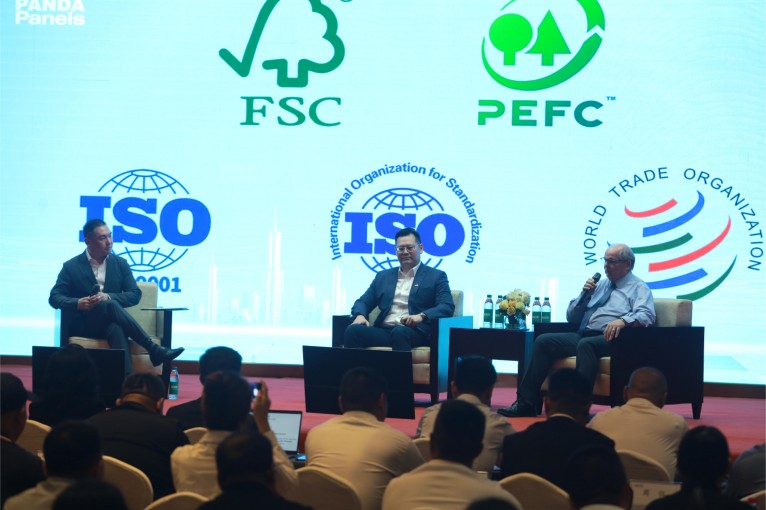
- Map supplier geographies against EUDR and local certification regimes (FSC®, PEFC®).
- Prioritize suppliers with systemized traceability and audit-ready operations.
- Benchmark brand consistency across markets, using digital tools to detect anomalies.
- Invest in partnerships that co-develop modular formwork solutions (e.g., FORRASIA®).
By adopting these practices, buyers can mitigate risk, optimize cost-performance ratios, and align with ESG mandates.
Conclusion: Charting the Course for Plywood’s Next Decade
Session 4 of the First Global Plywood Forum provided a strategic compass—illuminating how emerging markets, national infrastructure programs, and brand-systems mindsets will shape the global plywood market. As industrial innovation accelerates, success will belong to those who marry regulatory compliance with value-driven differentiation.
Partner with Pioneers in Plywood Strategic Positioning
Ready to align your projects with the future of sustainable construction and industrial wood innovation?
Connect with RILICO:
Navigate the global plywood landscape with confidence—partner with a brand built on trust, systems, and strategic alignment.